Wu-Tang Clan & Cultural Appropriation

  • Post author:
  • Post last modified:15 December 2025

Disclaimer

“Personally I don’t agree with the Cultural Appropriation Movement. I believe people can wear anything they like. I also believe they can wear their hair style anyway they like, and if others want to indulge in your culture, then you should be proud. However, for those who are in favor of the Cultural Appropriation Movement, this article is for you.”

[Note: This post contains affiliate links. If you purchase through these links, I may earn a small commission at no additional cost to you.]
Mac of All Trades

When we talk about cultural appropriation in music, certain examples immediately come to mind: white artists adopting Black musical styles, pop stars wearing Native American headdresses, or fashion brands misusing religious symbols. But there’s another case that deserves scrutiny and has largely escaped critical examination: the Wu-Tang Clan’s extensive borrowing from Asian culture.

The Wu-Tang Clan—nine Black men from Staten Island, New York—built a hip-hop empire on the foundation of Asian cultural elements. While their music revolutionized rap, their relationship with Asian culture raises serious questions about appropriation that fans and critics have been reluctant to address.

What They Took

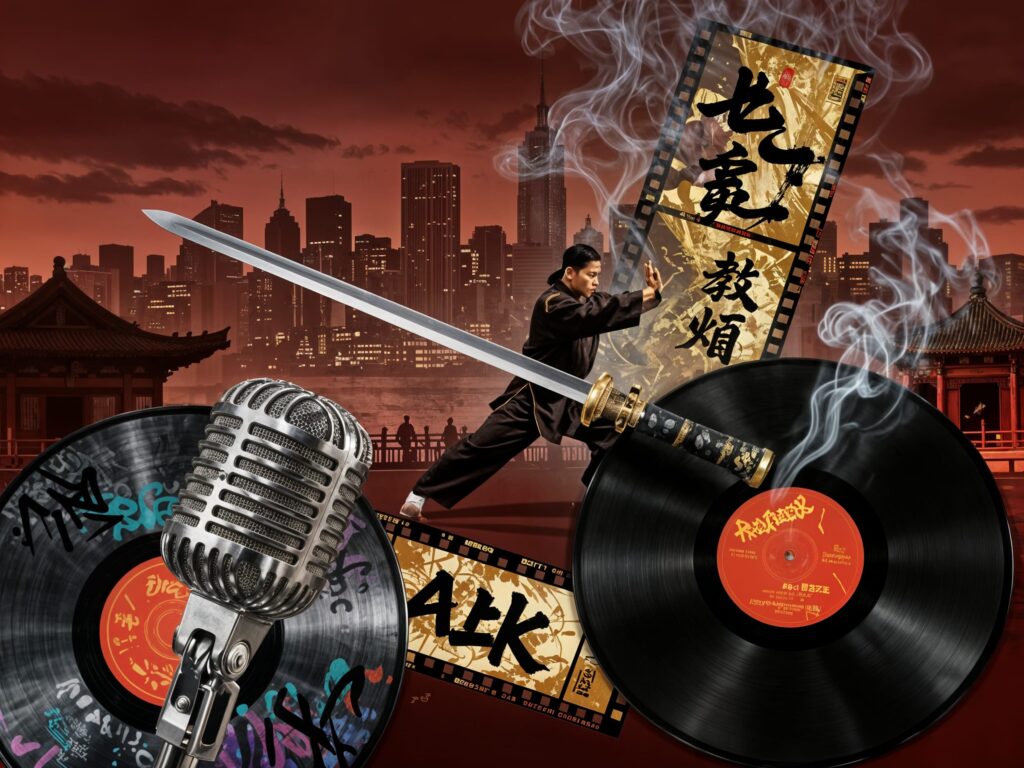
The scope of Wu-Tang’s cultural borrowing is extensive and systematic. They named their group after the 1983 Hong Kong martial arts film “Shaolin and Wu Tang.” They adopted kung fu terminology throughout their lyrics, sampled dialogue from dozens of martial arts films, and built their entire visual aesthetic around samurai imagery, Chinese calligraphy, and martial arts symbolism.

Album after album featured kung fu movie clips, Asian instrumentation, and references to martial arts philosophy. Method Man took his name from a kung fu film. Ghostface Killah referenced “Ironman,” another martial arts movie. The RZA styled himself after martial arts masters and incorporated Eastern philosophy into his production approach. This wasn’t occasional inspiration—it was the foundational framework of their brand identity.

The Fundamental Problem

Here’s the core issue: Wu-Tang Clan members are not Asian. They have no ancestral connection to Chinese, Japanese, or broader Asian cultures. They didn’t grow up within these traditions, weren’t raised by families who passed down these cultural practices, and had no organic relationship to the philosophies and art forms they adopted.

Instead, they encountered Asian culture through the lens of entertainment—specifically, kung fu films that were marketed to American audiences, including Black communities, through television programming. They took what appealed to them aesthetically and philosophically, extracted it from its cultural context, and repackaged it as part of their artistic identity.

This is textbook appropriation: members of one culture taking elements from another culture that isn’t their own, particularly when there’s no meaningful participation by or benefit to the originating community.

Exploitation Without Representation

Wu-Tang Clan didn’t just borrow from Asian culture—they profited enormously from it. The group generated millions of dollars in album sales, merchandise, and cultural influence, all while marketing themselves with heavy Asian imagery and philosophical references.

Consider the economics: Asian filmmakers, martial artists, and philosophers created the cultural products that Wu-Tang sampled and referenced. Yet none of these originating artists saw royalties from Wu-Tang’s success. No Asian communities benefited from the commercial empire built partly on their cultural heritage. The financial value flowed in one direction—away from Asian culture and toward Wu-Tang’s brand.

Their merchandise featured samurai swords, Asian calligraphy, and martial arts imagery. Their album covers displayed Chinese characters and kung fu aesthetics. They sold the “mystique” of Asian culture to consumers without any Asian artists or communities sharing in that economic success. This is cultural extraction for profit.

The Power Dynamic That Makes It Appropriation

What distinguishes cultural exchange from cultural appropriation is often the power dynamic involved. In the American entertainment industry of the 1990s—and still today—Asian Americans faced significant barriers. They were stereotyped, marginalized, and given limited opportunities for authentic representation. Asian actors were rarely cast in leading roles. Asian musicians struggled to break into mainstream success. Asian cultural expressions were often mocked or dismissed.

Yet Wu-Tang Clan, as non-Asian artists, could freely adopt Asian imagery and terminology and be celebrated as innovative and cool for doing so. They gained cultural capital and commercial success by using Asian elements that actual Asian Americans couldn’t leverage in the same way without facing stereotyping or discrimination.

This reveals the appropriation dynamic: Wu-Tang could cherry-pick the appealing aspects of Asian culture (warrior imagery, philosophical mystique, martial arts coolness) without experiencing any of the discrimination that Asian Americans faced. They accessed the benefits without the burdens.

Reducing Culture to Aesthetics and Stereotypes

Wu-Tang’s use of Asian culture focused heavily on specific stereotypical elements: martial arts, samurai warriors, ancient wisdom, and mysticism. They extracted what seemed exotic and powerful while ignoring the full complexity, diversity, and contemporary reality of Asian cultures.

This selective borrowing perpetuates a flattened, stereotypical view of Asian cultures as primarily about fighting, ancient philosophy, and martial mystique. It reduces thousands of years of diverse cultural traditions across dozens of distinct Asian societies into a simplistic aesthetic package centered on kung fu movies.

Moreover, their borrowing came from commercialized, Westernized representations of Asian culture—Hong Kong action films made for international export. They weren’t engaging with Asian culture directly or deeply, but rather with an already-processed, entertainment-industry version designed for Western consumption. This is appropriation of appropriation, further removed from authentic cultural engagement.
No Asian Voices at the Table

Perhaps most tellingly, Wu-Tang’s extensive use of Asian cultural elements occurred without meaningful collaboration with Asian artists or consultation with Asian communities. There was no dialogue, no partnership, no effort to include Asian voices in their creative process.

They sampled Asian films without working with Asian filmmakers. They used Asian philosophical concepts without engaging Asian philosophers or spiritual leaders. They adopted martial arts imagery without partnering with Asian martial artists. They built an empire on Asian aesthetics without ensuring Asian representation in their business ventures.

This absence of Asian participation reveals the extractive nature of their cultural borrowing. It wasn’t a conversation or an exchange—it was taking what they wanted and leaving Asian communities out of the creative and economic benefits entirely.

The Double Standard

Consider this thought experiment: Imagine if an all-white rap group had built their entire brand identity around Black cultural elements—sampling Black films, adopting Black vernacular, using imagery from Black history and culture, and profiting enormously while including no Black artists in their creative process and sharing no economic benefits with Black communities.

The hip-hop community would rightfully call this appropriation. Yet when Wu-Tang did essentially the same thing with Asian culture, it was celebrated as creative genius and cross-cultural artistry. This double standard demands examination.

Why Asian Americans Couldn't Do the Same

Here’s the cruel irony: While Wu-Tang Clan could build a successful brand using Asian cultural elements, actual Asian American artists in hip-hop faced barriers to success and struggled for representation. Asian Americans who tried to express their own cultural identity in music were often marginalized or told they didn’t fit the genre.

Wu-Tang got the cultural cache of Asian mystique without the racism that Asian Americans experience. They could use Asian culture as a marketable aesthetic while Asian artists couldn’t get record deals. This disparity illustrates exactly why this is appropriation—access to cultural benefits without cultural consequences.

The Missing Economic Justice

Cultural appropriation becomes particularly problematic when it involves economic exploitation. Wu-Tang generated substantial wealth using Asian cultural elements, but there was no mechanism for sharing that wealth with the communities whose culture they borrowed from.

Compare this to music sampling practices: When artists sample another artist’s music, they’re legally required to clear the sample and pay royalties. But there’s no equivalent system for cultural sampling. Wu-Tang could use kung fu film clips, Asian philosophical concepts, and martial arts imagery without compensating the originating cultures.

This economic dimension transforms cultural borrowing into cultural taking. When profit is extracted without return or reciprocity, it crosses from influence into exploitation.

Moving Beyond the Hero Worship

The hip-hop community has been reluctant to critically examine Wu-Tang’s cultural appropriation, largely because the group is so beloved and influential. Their music is groundbreaking, their impact undeniable, and their artistic vision revolutionary. But greatness in one area doesn’t exempt anyone from criticism in another.

We can acknowledge Wu-Tang’s musical genius while also recognizing that their relationship with Asian culture was appropriative. These two truths can coexist. In fact, honest reckoning with cultural appropriation requires us to examine even our heroes and the art we love.

What Should Have Been Different

If Wu-Tang wanted to engage with Asian culture respectfully rather than appropriatively, they could have:

  • Collaborated with Asian artists, filmmakers, and musicians
  • Shared economic benefits with Asian communities and artists
  • Used their platform to amplify Asian voices in hip-hop
  • Engaged more deeply with Asian cultures beyond commercialized kung fu films
  • Included Asian Americans in their creative and business ventures
  • Acknowledged the privilege of being able to adopt Asian aesthetics without facing anti-Asian racism

None of this happened. Instead, they took what they wanted, profited immensely, and left Asian communities and artists on the sidelines.

The Broader Lesson

The Wu-Tang Clan case teaches us that cultural appropriation isn’t always easy to identify, especially when the appropriating group is also marginalized in other ways. Black artists face enormous systemic racism and discrimination. But experiencing oppression in one area doesn’t give carte blanche to appropriate from other marginalized communities.

Appropriation is about power, access, and economic benefit. It’s about who gets to profit from culture and who gets left behind. It’s about taking without permission, participation, or reciprocity. By these measures, Wu-Tang’s relationship with Asian culture was appropriative.

This doesn’t mean we burn their albums or erase their contribution to music. It means we look honestly at how cultural exchange can go wrong even when the art is brilliant and the intentions may not be malicious. It means we recognize that our favorite artists aren’t perfect and that loving their work doesn’t require us to ignore problematic aspects.

Most importantly, it means we think carefully about what ethical cross-cultural engagement looks like and hold ourselves and our heroes accountable to those standards. The conversation about cultural appropriation isn’t about cancellation—it’s about justice, respect, and ensuring that when cultures influence each other, all communities benefit rather than some taking while others are left with nothing.

Wu-Tang Clan created some of the most innovative hip-hop ever made. They also engaged in cultural appropriation of Asian culture. Both statements are true, and wrestling with that complexity is how we build a more just approach to cultural exchange in music and beyond.

Mac of All Trades

Hey there! We hope you love our fitness programs and the products we recommend. Just so you know, Symku Blog is reader-supported. When you buy through links on our site, we may earn an affiliate commission at no extra cost to you. It helps us keep the lights on. Thanks.

Disclaimer: The information provided in this discussion is for general informational and educational purposes only. It is not intended as medical or professional advice. Only a qualified health professional can determine what practices are suitable for your individual needs and abilities.