
Day Trading &
The Freedom to Live
Anywhere on Earth
Your office is wherever you open your laptop. Your income doesn't care what city you wake up in. This is the complete guide to building a trading life without walls.
The Last Career That Doesn't Care Where You Live
Every other high-income career comes with an address. The surgeon lives near the hospital. The lawyer lives near the clients. The engineer lives near the office. Day trading is different — perhaps uniquely so among all serious income-generating pursuits. The market opens at the same time whether you're in a penthouse in Singapore, a beach bungalow in Bali, a mountain cabin in Medellín, or your childhood bedroom in Ohio. Your P&L statement has no idea what city you're in.
The rise of commission-free brokerages, fiber internet in every corner of the globe, and mobile trading platforms that fit in your pocket has collapsed the last remaining geographic advantages of institutional traders. A retail trader in Da Nang, Vietnam with a quality internet connection and a laptop can execute the same trades, access the same charts, and use the same analytical tools as a hedge fund analyst on the 47th floor of a Manhattan skyscraper — often at a fraction of the cost.
This guide explores the full picture: the genuine, life-changing benefits of day trading as a location-independent income source, the most important things to understand before you start, the best markets to trade, the best cities in the world to base yourself as a trader, and the honest truths that most "trading freedom" content glosses over.
Location independence unlocks not just lifestyle flexibility, but a form of financial arbitrage most people never consider — relocating to a lower-cost city can cut living expenses by 30–50% while preserving your earning potential, effectively boosting your net profit without placing a single additional trade.
Eight Life-Changing Benefits of Day Trading as a Career
Trading gets reduced to "make money fast" in popular culture, but the real benefits go much deeper than the P&L. Here's what successful traders consistently report as the biggest wins.
True Location Independence
All you need is a stable internet connection delivering sub-50 Mbps download speeds and a broker account with real-time data. Studies show over 92% of populated regions globally support speeds enabling sub-100ms order routing to the nearest exchange. From a beach in Bali to an apartment in Lisbon — your trading setup works anywhere.
Income Without a Ceiling
Unlike a salary, your trading income isn't capped by what an employer thinks you're worth. Position size scales with your account. A trader who masters risk management and strategy can grow income in proportion to capital — a leverage of skill rather than seniority or negotiation.
Time Freedom & Schedule Control
The US stock market is open 9:30 AM–4:00 PM ET. That's it. The most active trading window is typically the first 1–2 hours. Many successful traders complete their entire trading day before lunch. The rest of the day is yours — for family, hobbies, travel, or building other income streams.
The Ultimate Self-Development Program
Day trading forces profound self-awareness. It surfaces fear, greed, impatience, and ego with brutal clarity. Traders who succeed are those who learn to manage their own psychology as rigorously as they manage risk. Many describe trading as the most demanding — and transformative — personal growth experience of their lives.
Meritocratic & Objective
The market doesn't know your race, gender, age, educational background, or who you know. Your results are entirely your own. There's no corporate politics, no biased hiring manager, no glass ceiling. You are measured purely by your performance — a quality that many find deeply appealing after years in traditional employment.
Geographic Cost Arbitrage
This is the killer feature most people miss. If you earn $5,000/month trading US markets, that income goes dramatically further in Medellín, Chiang Mai, Tbilisi, or Da Nang than it does in Chicago or New York. Your dollars don't care where you live. Your rent does. Move somewhere cheaper and you've effectively given yourself a massive raise without trading a single additional share.
No Office Politics or Commute
The average American commutes 27 minutes each way — nearly an hour a day lost forever. Add toxic workplaces, micromanagement, and office politics, and it's clear why so many people are drawn to the pure meritocracy of trading. Your only colleague is the market. Your only boss is your risk management rules.
Capital Is Always Liquid
Unlike real estate, private equity, or a physical business, trading capital stays liquid. You can scale up, scale down, take a week off, or withdraw funds without a buyer, a board, or a real estate agent. This flexibility is particularly valuable for those who want the ability to walk away — or double down — on their own terms.
What a Trader's Day Actually Looks Like — Living Abroad
One of the most common misconceptions about day trading is that it requires staring at screens for eight hours. Successful traders — especially those trading US stocks from overseas — work surprisingly compressed schedules, leaving the bulk of each day for life outside the markets.
Here's a realistic day for a US equity day trader based in Southeast Asia (GMT+7, e.g., Da Nang, Vietnam or Chiang Mai, Thailand):
📅 Sample Trading Day — Southeast Asia Base (GMT+7)
Morning Routine & Pre-Market Prep
Wake up, exercise, breakfast, coffee. Review overnight news, earnings, gap-ups/gap-downs. Build your watchlist. Identify potential catalysts and key levels. No trades yet — preparation is everything.
Pre-Market & Market Open (9:30 PM Local Time)
US markets open at 9:30 AM ET, which is 9:30 PM in GMT+7. The first 30–60 minutes of the session is often the highest-volume, highest-volatility window. This is prime time for momentum and breakout strategies.
Active Trading Window
Most professional day traders focus on the first 1–2 hours of the US session. This is when most of the day's biggest moves happen. Once your daily profit target or max loss limit is hit, you stop — full stop. Discipline over dollars.
Close Positions & Journal
Review each trade. What worked? What didn't? A trading journal isn't optional for serious traders — it's the mechanism through which you actually improve. Log entries, exits, emotional state, and lessons learned.
The Rest is Yours
Sleep, explore, surf, hike, eat incredible local food, spend time with family, work on other projects. This is the lifestyle the trading income buys: genuine freedom during the daylight hours of wherever you've chosen to call home.
Pro note on time zones: Traders in Europe (GMT+1 to GMT+2) catch the US open at 3:30–4:30 PM local time — perfect for a full daytime productive schedule before markets even open. Traders in Latin America (GMT-3 to GMT-5) are almost in sync with New York. Every time zone has its own rhythm. Most traders settle into theirs within a few weeks.
Which Markets Can You Trade? A Breakdown for Location-Free Traders
Not all markets are created equal for the location-independent trader. Each has distinct advantages, capital requirements, and time zone implications. Here's what you need to know.
US Stocks (Equities)
Most PopularThe deepest, most liquid market in the world. High-cap stocks like AAPL and TSLA see intraday swings of 2–5%+ regularly. The wealth of educational content, screeners, and community support is unmatched.
- Unmatched liquidity and volume
- Massive educational ecosystem
- Defined 6.5-hour trading window
- PDT rule requires $25K minimum (US accounts)
- Short trading window can be awkward in Asian time zones
Futures (ES, NQ, MNQ)
Best for Small AccountsIndex futures like the E-mini S&P 500 (ES) and Nasdaq 100 (NQ) — or their Micro versions (MES, MNQ) — are arguably the best market for traders wanting the equity market without the PDT rule or capital restrictions.
- No PDT rule — trade as much as you want
- Favorable 60/40 tax treatment (Section 1256)
- Trade nearly 24/5 — works in most time zones
- Micros available from ~$50–$100 per contract
- Leverage can amplify losses quickly
Forex (FX)
Most Accessible GloballyThe world's largest market at $9.6 trillion in daily volume. Forex trades 24 hours a day, five days a week, making it accessible from literally any time zone on earth. No PDT rules anywhere in the world.
- Truly 24/5 — trade from any time zone
- No PDT rule globally
- Start with very small accounts
- Lower volatility on major pairs can limit intraday moves
- Broker selection critical — many unregulated operators
Crypto
24/7 Volatile PlaygroundThe youngest and most volatile market. Bitcoin regularly swings 3–5% daily. Altcoins can move 10–50%+ in a session. Crypto trades 24/7, 365 days a year, making it the most time-zone-agnostic market of all.
- 24/7/365 — never closed
- Extreme volatility = extreme opportunity
- No PDT rule on any crypto exchange
- Regulation still evolving globally
- Can be psychologically exhausting — no "off" switch
🔑 The PDT Rule — What Every Aspiring Trader Must Understand
If you're planning to trade US stocks in a margin account through a US broker, you'll encounter the Pattern Day Trader (PDT) rule. Established by FINRA after the dot-com bubble, it requires traders who make 4 or more day trades within any 5-business-day window to maintain a minimum of $25,000 in their account at all times. Fall below that threshold after being flagged, and your broker will restrict your trading.
The good news: the rule has several practical workarounds for those who can't yet meet the $25K minimum. Futures and Forex have zero PDT restrictions, even in the US. Cash accounts (rather than margin accounts) aren't subject to PDT either — you just can't reuse unsettled funds same-day. Traders using non-US brokers in Europe, Australia, Asia, or most other jurisdictions are entirely exempt from the PDT rule. Additionally, in late 2025, FINRA's Board approved proposed amendments to replace the fixed $25K minimum with a risk-based intraday margin framework — pending SEC approval, this could lower the effective barrier significantly by 2026.
The Geographic Arbitrage Playbook: Living Better for Less
Here's the concept that changes the math entirely: geographic arbitrage. Your trading income is denominated in a strong currency (USD, EUR, GBP). Your living expenses are denominated in whatever currency exists at your chosen base. Move your life to a country where that strong currency buys dramatically more, and your effective salary multiplies without a single extra trade.
A trader earning $4,000/month after taxes is middle-class in New York City, barely comfortable in Austin or Miami, and wealthy in Medellín, Da Nang, Tbilisi, or Chiang Mai. The same income supports a completely different lifestyle depending on where you choose to spend it. This is the core freedom that day trading — uniquely — makes possible at scale.
🇻🇳 Da Nang, Vietnam
As covered in our companion guide, Da Nang is arguably the most balanced nomad city in Southeast Asia for US traders. US market hours (9:30 PM–midnight local) leave the entire day free. A comfortable lifestyle — nice beachside apartment, coworking space, eating out daily, gym, and weekend trips — runs $1,200–$2,000/month. That same lifestyle in the US would cost $4,000–$6,000. Internet regularly tests at 50–200 Mbps. The growing expat and nomad community means you'll quickly find other traders to connect with.
🇨🇴 Medellín, Colombia
One of the most popular nomad destinations in Latin America, and arguably the best for US equity traders due to the time zone alignment. Medellín is GMT-5 — nearly identical to New York. Markets open at 9:30 AM local time, just like trading from the East Coast. Yet the cost of living is 60–70% lower than comparable US cities. Excellent fiber internet, a booming café culture, year-round spring weather (it's nicknamed "The City of Eternal Spring" at 1,495 meters elevation), and a remarkable food and nightlife scene. Monthly budgets of $1,500–$2,500 support a genuinely high quality of life.
🇵🇹 Lisbon & Porto, Portugal
For traders who want Europe, Portugal is the gold standard. EU member state, English widely spoken, beautiful cities, world-class food, and Atlantic beaches. GMT+1 (GMT+0 in winter) means US markets open at 2:30–3:30 PM local time — you work afternoons and evenings. Portugal's Non-Habitual Resident (NHR) tax regime historically offered highly favorable tax treatment for qualifying foreign-source income for 10 years — consult a tax professional for current 2026 rules. Monthly costs in Lisbon or Porto run $2,000–$3,500 for a comfortable lifestyle, still significantly below comparable Western European cities.
🇬🇪 Tbilisi, Georgia
The dark horse favorite among traders who want Europe's culture without Europe's prices. Georgia offers a flat 1% income tax rate for certain qualifying small business income, 20% personal income tax otherwise — and importantly, capital gains from trading foreign instruments are often taxed very favorably for non-domiciled residents. Monthly costs in Tbilisi run $800–$1,500 for a comfortable expat lifestyle. GMT+4 means US markets open at 5:30 PM local — you trade evening sessions and have full days free. Outstanding Georgian cuisine, a fascinating culture, easy e-residency for business registration, and a year-round stream of expats and digital nomads.
🇦🇪 Dubai, UAE
For high-earning traders who want to maximize income retention, Dubai is the world's most compelling option: 0% personal income tax, 0% capital gains tax for individuals, and a lifestyle infrastructure that rivals any city on Earth. GMT+4 means US markets open at 5:30 PM — afternoons and evenings are dedicated to trading, days are entirely yours. The cost of living is higher than Southeast Asia ($3,500–$6,000/month for a comfortable expat life), but for a trader doing serious volume, keeping all of your gains vs. paying 30–40% to the IRS is an extraordinary financial advantage. Multiple residency pathways exist, including investor visas and the UAE Golden Visa.
🇹🇭 Chiang Mai, Thailand
The original digital nomad capital of Southeast Asia. GMT+7 aligns with Da Nang, making it another city where US equity traders work evenings. Costs are even lower than Da Nang — a comfortable life runs $900–$1,600/month. An enormous established expat community, outstanding Thai food at $1–$3 per meal, excellent coworking spaces, warm weather, and the extraordinary cultural richness of northern Thailand. Coworking spaces like CAMP (inside Maya Mall) are legendary for reliable Wi-Fi and never being closed.
🇲🇽 Mexico City (CDMX)
One of the great underrated options for US traders. GMT-6 means US markets open at 8:30 AM local — almost identical to Central Time in the US. You wake up, trade the morning session, and have the entire afternoon free in one of the world's most culturally rich, culinarily extraordinary, architecturally stunning cities. Monthly costs run $1,500–$2,500 for a comfortable lifestyle in Roma Norte or Condesa. Spanish is essential but many expats get by without it in cosmopolitan neighborhoods. The US-Mexico time zone alignment is a genuine strategic advantage for equity day traders.
🇪🇸 Barcelona or Valencia, Spain
Mediterranean climate, world-class food and architecture, beaches, mountains, and one of Europe's most vibrant cultures. Spain's Beckham Law (Ley Beckham) allows qualifying foreign workers and entrepreneurs to pay a flat 24% tax rate on Spanish-sourced income for up to 6 years — worth investigating with a Spanish tax advisor. Markets open at 3:30 PM local time, leaving mornings completely free for beach, hiking, café culture, and exploration. Monthly costs in Valencia run $2,000–$3,200; Barcelona runs slightly higher at $2,500–$4,000.
Best Cities for Trader Tax Treatment — At a Glance
Tax treatment of trading income varies dramatically by jurisdiction. This is one of the most powerful levers available to location-independent traders. Always consult a qualified international tax advisor before making residency decisions.
| Location | Capital Gains Tax | Income Tax | US Mkt Open (Local) | Cost of Living | Trader Friendliness |
|---|---|---|---|---|---|
| 🇦🇪 Dubai, UAE | 0% | 0% | 5:30 PM | High | ★★★★★ |
| 🇸🇬 Singapore | 0% | 0–22% | 9:30 PM | Very High | ★★★★☆ |
| 🇬🇪 Tbilisi, Georgia | Low / 0%* | 1–20% | 5:30 PM | Very Low | ★★★★★ |
| 🇵🇹 Lisbon, Portugal | Variable / NHR* | NHR Flat Rate* | 2:30 PM | Medium | ★★★★☆ |
| 🇪🇪 Tallinn, Estonia | 0% (reinvested)* | 20% | 4:30 PM | Medium-Low | ★★★★☆ |
| 🇨🇴 Medellín, Colombia | Variable* | Progressive | 9:30 AM | Low | ★★★★☆ |
| 🇻🇳 Da Nang, Vietnam | Variable* | Progressive | 9:30 PM | Very Low | ★★★☆☆ |
| 🇺🇸 New York, USA | Up to 40.8% | Up to 37%+ | 9:30 AM | Very High | ★★★☆☆ |
* Tax situations are complex and vary based on residency status, trading structure, treaty agreements, and individual circumstances. These figures are general indicators only. Always obtain professional tax advice before relocating.
The Real Path to Becoming a Profitable Day Trader
The freedom day trading offers is real. So is the difficulty. The vast majority of new traders lose money — not because trading is impossible, but because they approach it as gambling rather than as a skill-based profession. Here's what the actual path to profitability looks like.
Phase 1: Education (1–3 Months)
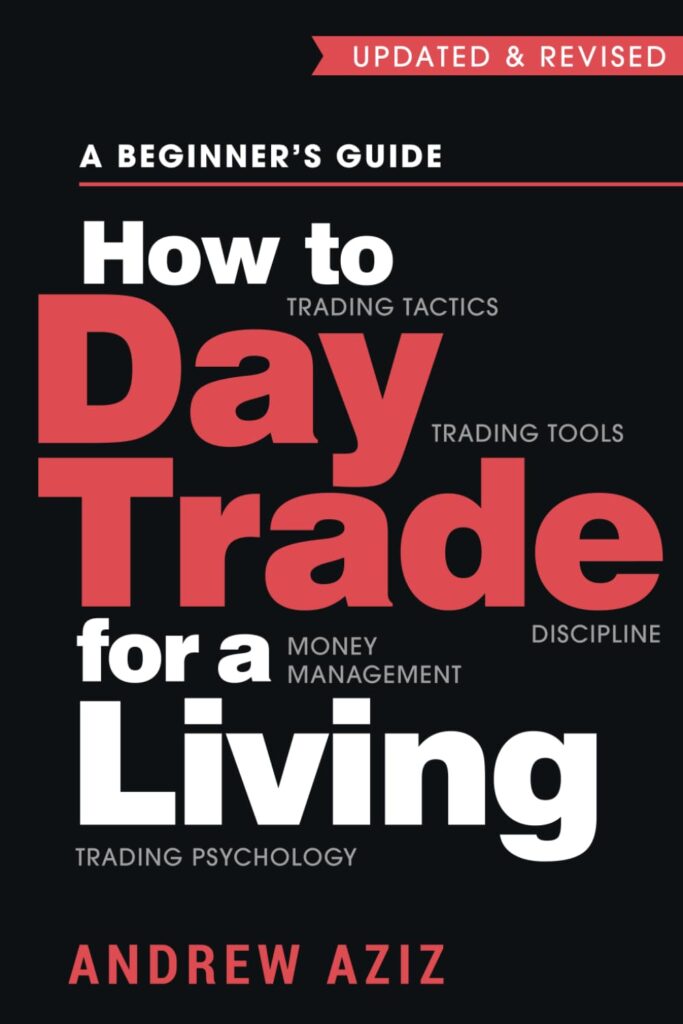
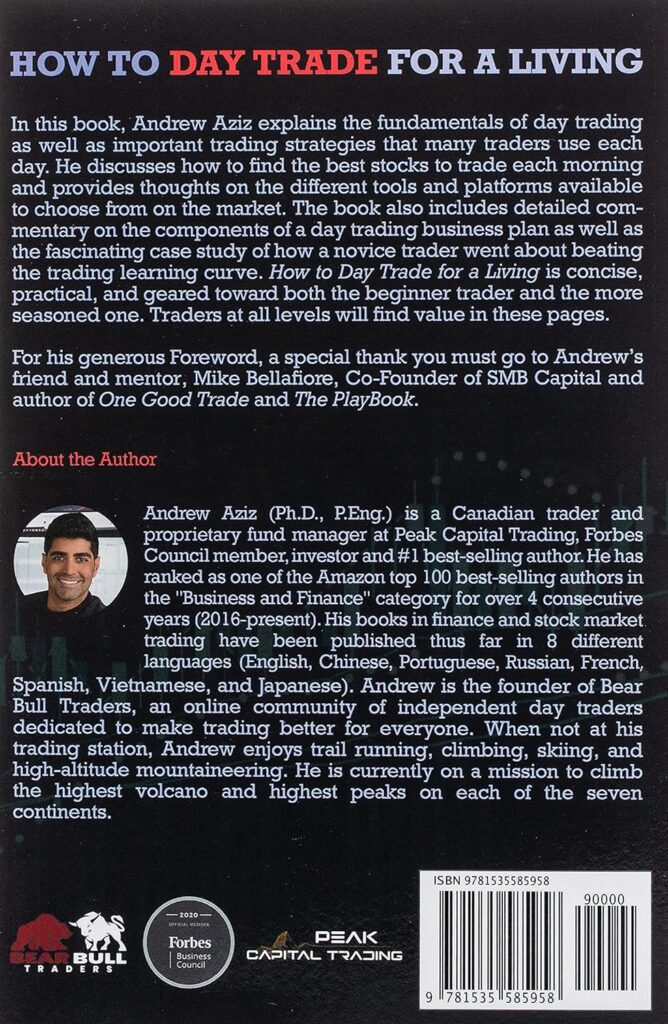
Study market structure, order types, level 2 data, candlestick patterns, volume analysis, and basic technical analysis. Read key books (How to Day Trade for a Living by Andrew Aziz is a widely respected starting point). Understand the specific market you want to trade before touching real money.
Phase 2: Simulation (2–6 Months)
Paper trade and demo accounts are not optional — they're mandatory. Trade your chosen strategy in simulation with the same rigor as real money. Most serious traders spend 3–6 months in simulation before going live. If you can't demonstrate consistent profitability in a demo environment, real money will only amplify your losses.
Phase 3: Small Live Account (3–6 Months)
Go live with a small account — enough to feel real consequences, but not enough to be catastrophic. The psychological difference between sim and live trading is significant. This phase is about learning to manage your emotions under real conditions, not about making money. Expect losses. Plan for them.
Phase 4: Scale What Works
Once you've demonstrated consistent profitability over 3+ months in a live environment, you have genuine evidence of edge. Only then should you increase position size. Scaling a losing strategy just loses money faster. Scaling a proven edge is how trading income grows over time.
The Trading Journal Is Non-Negotiable
Every single trade should be logged: entry price, exit price, size, setup type, emotional state, outcome. Review weekly. Look for patterns in your winners and losers. Your journal is your personal data set — the most valuable research tool you have. Traders who don't journal are flying blind.
Psychology Is the Real Edge
The biggest difference between profitable traders and losing ones is rarely strategy. It's psychology. Revenge trading after a loss, holding losers too long hoping they come back, cutting winners early out of fear — these are the patterns that drain accounts. Mastering your emotional responses to market volatility is the true work of a trader.
Setting Up Your Mobile Trading Life — Practical Checklist
The physical and logistical setup for trading from anywhere in the world is simpler than most people imagine. Here's everything you need to get right.
Hardware: Keep It Simple but Reliable
A quality 15-inch laptop with 16GB RAM is sufficient for most traders. Add a portable USB-powered monitor for multi-chart setups. A 5G mobile hotspot as backup internet is essential — never be mid-trade when café Wi-Fi drops. Total weight: under 4kg for a full professional setup.
Internet: Redundancy Is Everything
Primary: apartment fiber (target 50 Mbps minimum). Backup: 5G hotspot with local SIM. Secondary backup: your phone's hotspot. Never rely on a single connection for live trading. Test your latency to your broker's servers — most retail platforms tolerate sub-500ms round trips without meaningful slippage.
Banking: Multi-Currency Setup
Open a Wise or Charles Schwab account for fee-free international ATM withdrawals and low-cost currency conversion. Keep your US bank account active for broker funding. Consider a second broker account as backup. Never keep more cash in your trading account than you're willing to risk.
Security: VPN + 2FA Everywhere
Use a VPN on all devices, especially on public and café Wi-Fi. Enable two-factor authentication on every brokerage and banking account. Use a password manager. Trading accounts with real capital are prime targets — never underestimate account security when working from shared networks.
Tax: Get a Cross-Border Accountant Early
US citizens owe taxes on worldwide income regardless of where they live — FATCA requires foreign financial institutions to report your accounts to the IRS. Engage a CPA who specializes in expat taxation and trader tax status (TTS) before you move, not after. The cost of proactive advice is always less than the cost of unwinding tax mistakes.
Health Insurance: Don't Skip This
SafetyWing, Cigna Global, and Aetna International all offer solid expat/nomad health plans. Day trading is a high-stress profession — your long-term health is part of your long-term trading edge. Make sure you're covered, especially if trading in countries where public healthcare is unavailable to foreigners.
Time Zone: Pick Your Market, Then Your City
Decide first which market(s) you'll trade, then choose a city whose time zone makes those hours sustainable. Forcing yourself to trade at 3 AM every day is a psychological tax. Choose a location where your market hours fall during reasonable waking hours. Your trading performance will reflect the quality of your sleep.
Community: Find Your Tribe
Trading alone can be isolating. Seek out trader communities wherever you land — online via Discord servers, Reddit, Twitter/X trading communities, or in-person through nomad coworking spaces. The accountability, shared knowledge, and camaraderie of a good trading community meaningfully accelerates learning curves.
The Truths Nobody in the Trading World Wants to Tell You
This guide would be dishonest if it presented day trading purely as a freedom lifestyle ticket without addressing the significant challenges involved. Read this section carefully.
Most Traders Lose Money — Especially at First
Academic studies consistently indicate that fewer than 10% of active day traders reliably outperform a passive benchmark over time. This doesn't mean trading is impossible — it means the learning curve is steep, capital losses during the learning phase are normal and expected, and survival requires more patience and discipline than most people bring to the table. Treat early losses as tuition, not evidence that you should quit or scale up.
The Psychological Toll Is Real and Significant
Watching your account balance swing thousands of dollars in minutes is not something your nervous system adapts to quickly. Studies show cognitive performance deteriorates meaningfully over long trading sessions. Stress is a constant companion, especially during drawdown periods. Successful traders develop rigorous routines — meditation, exercise, sleep hygiene, journaling — specifically to manage the psychological demands of the work.
It's Not as Passive as the Instagram Lifestyle Makes It Look
The "trade for 2 hours and spend the rest of the day on the beach" narrative is real for experienced traders with proven edge — but it takes years to get there. In the learning phase, successful traders study markets obsessively, review their trades for hours, read everything they can find, and iterate relentlessly. The freedom comes after you've earned it, not while you're learning.
Inconsistent Income Requires Careful Financial Planning
Trading income is volatile by nature. A great month followed by a bad month followed by a breakeven month is normal. If you're relying on trading as your sole income source before you've achieved genuine consistency, you'll be under constant financial pressure — which is exactly the wrong headspace for making rational, unemotional trading decisions. Most successful full-time traders built a financial cushion of 12–24 months of living expenses before making the leap.
Tax Complexity for US Citizens Abroad Is Non-Trivial
Unlike citizens of most other countries, Americans owe taxes to the IRS on their worldwide income regardless of where they live. The Foreign Earned Income Exclusion (FEIE) typically does not apply to trading gains, as they're considered unearned income. US citizens living abroad and trading must typically still file and potentially pay US taxes, plus comply with FBAR and FATCA reporting requirements for foreign accounts. The GILTI rules, treaty interactions, and trader tax status (TTS) elections add further layers. This is manageable — but it requires professional guidance.
⚠️ Risk Disclosure
- Day trading involves substantial risk of loss and is not appropriate for all investors.
- Past performance is not indicative of future results. Markets change, strategies stop working.
- Never trade with money you cannot afford to lose completely. Capital preservation is the first rule.
- Leverage amplifies both gains and losses — futures and forex margin can wipe accounts in single sessions.
- This blog post is for informational purposes only and does not constitute financial, investment, or tax advice. Consult qualified professionals before making any financial decisions.
Last updated April 2026 · This post is for informational and educational purposes only. Nothing here constitutes financial, investment, legal, or tax advice. Day trading carries substantial risk of loss. Always consult licensed financial and tax professionals before making investment or residency decisions. The mock ticker values shown in the header are illustrative only.
Hey there! We hope you love our fitness programs and the products we recommend. Just so you know, Symku Blog is reader-supported. When you buy through links on our site, we may earn an affiliate commission at no extra cost to you. It helps us keep the lights on. Thanks.
Disclaimer: The information provided in this discussion is for general informational and educational purposes only. It is not intended as medical or professional advice. Only a qualified health professional can determine what practices are suitable for your individual needs and abilities.