
We’ve all been there. You’re in a meeting when someone confidently presents an idea so fundamentally flawed that you momentarily question reality itself. Or perhaps you’re stuck in a conversation with someone who mistakes volume for validity, certain that shouting their opinion makes it more true. The impulse to correct, to educate, to simply walk away can be overwhelming.
But here’s what separates genuinely intelligent people from those who merely think they’re smart: they’ve learned that dealing with difficult people isn’t about proving superiority. It’s about strategic engagement, emotional regulation, and knowing when the battle simply isn’t worth fighting.
Are They Really Idiots?
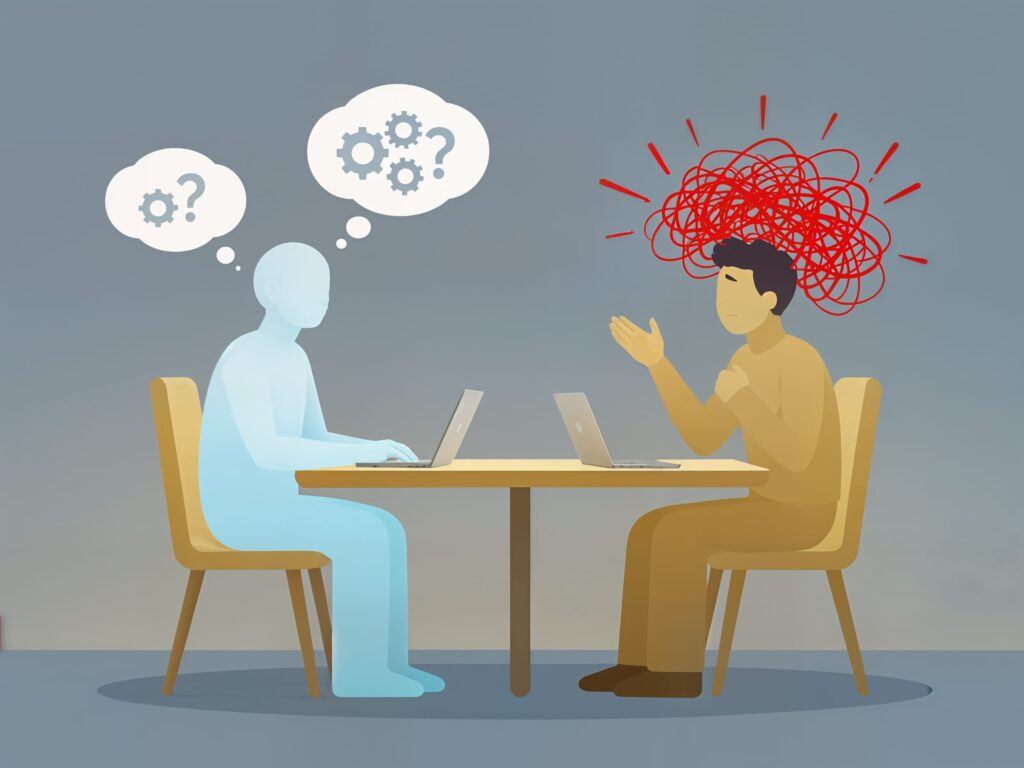
Before we dive into strategies, intelligent people start with a crucial question: Is this person actually unintelligent, or are they simply uninformed, emotional, tired, or operating from a completely different set of assumptions?
The truly wise recognize that intelligence manifests in countless forms. The colleague who struggles with abstract concepts might possess extraordinary emotional intelligence. The person who seems oblivious to social cues could be a brilliant systematic thinker. The friend who makes baffling life choices might understand something about happiness that eludes more “rational” minds.
This reframe isn’t about being generous to a fault. It’s about accuracy. Dismissing someone as an idiot is often intellectual laziness disguised as superiority. Real intelligence means diagnosing the actual problem before attempting a solution.

Strategy One: Master the Art of Strategic Silence
Intelligent people understand that not every wrong statement requires correction. They’ve internalized a powerful truth: being right and proving you’re right are two entirely different goals with vastly different costs.
Consider the colleague who consistently mangles facts in meetings. The instinct is to correct them immediately, to set the record straight, to ensure everyone knows the truth. But intelligent people calculate the cost-benefit ratio. Will this correction change the outcome of the meeting? Will it damage this person’s credibility in ways that matter? Will it create an enemy who undermines you later? Or will your correction simply waste five minutes and create awkward tension?
Strategic silence isn’t cowardice. It’s recognizing that your time, energy, and social capital are finite resources. Save your corrections for when they actually matter, for when false information will cause real harm or lead to poor decisions. Let the small stuff slide. Your reputation for being right will be stronger when you’re not the person who corrects everyone about everything.
The key is developing what psychologists call “response flexibility,” the ability to choose your reaction rather than being controlled by your immediate impulse. When someone says something egregiously wrong, pause. Take a breath. Ask yourself: “Does this matter?” More often than not, the answer is no.
Strategy Two: Ask Questions Instead of Making Statements
When you do need to engage, intelligent people have learned that questions are far more effective than declarations. This isn’t Socratic method posturing; it’s practical psychology.
When you tell someone they’re wrong, you trigger their defensive instincts. Their brain floods with cortisol, rational thinking diminishes, and they dig into their position regardless of the evidence. But when you ask genuine questions, you create space for them to discover their own errors.
Instead of saying “That’s not how statistics work,” try “Help me understand how you’re calculating that percentage?” Instead of “That policy would never work,” ask “What do you think would happen if we implemented that in a company with different constraints than ours?”
This approach works for two reasons. First, it forces the other person to articulate their reasoning, often revealing the gaps in their logic to themselves. Second, it positions you as curious rather than combative, which keeps the conversation collaborative rather than adversarial.
The most sophisticated version of this strategy involves what negotiation experts call “tactical empathy.” You acknowledge the other person’s perspective before gently probing its weaknesses. “I can see why you’d think that approach would work, and in some contexts it might. I’m curious though, how would that play out when we factor in X?”
This isn’t manipulation. It’s recognizing that people rarely change their minds because someone told them they were wrong. They change their minds when they feel safe enough to question themselves.
Strategy Three: Emotional Detachment and the Observer Mindset
Perhaps the most powerful tool intelligent people develop is the ability to emotionally detach from frustrating interactions. They cultivate what meditation practitioners call “observer consciousness,” the capacity to watch their own reactions without being controlled by them.
When someone is being difficult, stupid, or infuriating, notice how your body responds. Your jaw tightens. Your breathing becomes shallow. Your thoughts race with rebuttals and frustrations. Intelligent people have trained themselves to recognize these signals and mentally step back.
They think of frustrating people as fascinating anthropological studies. What beliefs must this person hold for their behavior to make sense? What experiences shaped those beliefs? What unmet needs are they trying to satisfy through this interaction?
This doesn’t mean becoming cold or uncaring. It means creating enough psychological distance to respond thoughtfully rather than react emotionally. A heated argument with an idiot drains your energy and accomplishes nothing. An anthropological observation of curious human behavior is almost entertaining.
One practical technique is mental narration, borrowed from cognitive behavioral therapy. When someone is being particularly difficult, narrate what’s happening in your mind as if you’re a wildlife documentarian. “Ah, yes, here we see the middle manager in his natural habitat, threatened by new information that contradicts his established worldview. Notice how he puffs up his chest and speaks more loudly to re-establish dominance.” The gentle absurdity of this internal monologue creates just enough distance to keep you calm.
Strategy Four: Redirect Rather Than Confront
Intelligent people are masters of conversational redirection. When they’re trapped in a discussion with someone who’s confidently wrong or aggressively ignorant, they don’t bang their heads against the wall trying to change that person’s mind. They redirect the conversation to more productive territory.
This might mean acknowledging the other person’s point without endorsing it (“That’s one perspective”) and then pivoting to related but more fruitful ground. It might mean finding the tiny grain of truth in their argument and building on that rather than battling the rest. It might mean changing the subject entirely when a conversation has clearly become unproductive.
The key is doing this smoothly, without obvious dismissiveness. “That’s an interesting theory about why the project failed. What I’m really curious about is how we prevent similar issues going forward” acknowledges without agreement, then moves forward.
Redirection works because it honors the social contract of conversation while protecting your sanity and time. You’re not overtly rejecting the other person; you’re just not engaging with the part of their argument that’s hopeless.
Strategy Five: Pick Your Battles with Surgical Precision
Intelligent people develop clear criteria for when to engage and when to walk away. They don’t waste energy on arguments they can’t win, people who won’t listen, or situations where being right serves no purpose.
They ask themselves several key questions before deciding to engage:
Is this person capable of changing their mind? Some people have identities so wrapped up in their beliefs that changing their mind would require a personality reconstruction. There’s no point arguing with them.
Are there observers who matter? Sometimes the goal isn’t convincing the idiot, it’s preventing their ideas from taking root with everyone else in the room. If you’re one-on-one, let it go. If you’re in front of people who might be influenced, speak up.
Is this my responsibility? Just because you could correct someone doesn’t mean you should. Is this your job? Your relationship? Your problem? If not, someone else can handle it.
What’s the downside of being wrong here? If someone believes something false about cooking techniques or movie trivia, who cares? If they believe something false about financial planning or medical treatment, that’s different.
Am I tired, hungry, or stressed? Intelligent people know that their own state affects their judgment. When you’re depleted, everything seems more annoying and you’re more likely to engage in unproductive arguments. Sometimes the smartest move is to wait until you’re in a better state to decide whether something is worth addressing.
Strategy Six: Set Boundaries Without Drama
When someone repeatedly wastes your time, disrespects your expertise, or refuses to engage in good faith, intelligent people set clear boundaries. But they do it calmly, directly, and without the satisfying drama of telling someone off.
“I don’t think we’re going to reach agreement on this, so I’m going to step away from the conversation” is clear without being insulting. “I’ve shared my perspective and don’t have anything to add beyond that” sets a boundary while remaining professional. “I need to focus my time on other priorities” is honest and doesn’t invite debate.
The mistake many people make is either suffering in silence until they explode, or being aggressive in their boundary-setting. Intelligent people find the middle path: they’re clear about their limits without being cruel or dramatic about enforcing them.
They also recognize that boundaries sometimes mean limiting contact. You don’t have to argue with your uncle about politics at Thanksgiving, and you don’t have to change his mind. You can simply say “I’d rather not get into that today” and then stick to it, leaving the table if necessary. You don’t have to attend every meeting where that one colleague pontificates. You can send a representative or review the notes later.
Creating physical and temporal distance from people who drain you isn’t mean, it’s basic self-preservation. Your time and energy matter.
Strategy Seven: Develop Persuasion Skills for When It Counts
While intelligent people avoid unnecessary battles, they develop sophisticated persuasion skills for when engagement truly matters. They study rhetoric, negotiation, and psychology not to manipulate, but to communicate effectively with people who think differently than they do.
They understand that people are rarely convinced by facts alone. Humans are primarily emotional creatures who use logic to justify feelings. So when intelligent people need to change someone’s mind, they start with emotional resonance.
They frame arguments in terms of the other person’s values, not their own. If you’re talking to someone who cares deeply about tradition, you emphasize how your proposal honors important principles from the past. If you’re talking to someone motivated by innovation, you emphasize the novel aspects of your idea.
They use stories and examples rather than abstract arguments. The human brain is wired for narrative. “Studies show this policy reduces costs by 15%” is less compelling than “Let me tell you about how this policy saved a company like ours thousands of dollars last quarter.”
They make their case and then stop talking. Many people undermine their own arguments by continuing to push after they’ve made their point. Intelligent people present their position clearly, answer questions, and then give the other person space to process. Silence is persuasive.
They also know when someone is genuinely persuadable versus when they’re just being polite. They watch for signs of actual consideration, questions that indicate engagement, acknowledgment of points made. If those signs aren’t there, they stop expending energy on persuasion.
Strategy Eight: Cultivate Compassion Without Becoming a Doormat
Perhaps the most sophisticated approach intelligent people develop is genuine compassion for difficult people, without sacrificing their own wellbeing or compromising on truth.
They recognize that the person being “idiotic” might be going through something hard. They might be dealing with grief, health issues, financial stress, or any number of invisible struggles that diminish their capacity for clear thinking or kind behavior. They might have grown up in environments that didn’t teach them critical thinking skills or social awareness.
This recognition doesn’t mean accepting abuse or tolerating harmful behavior. It means responding to difficult people with humanity rather than contempt. It means being firm about boundaries while still treating people with basic dignity.
It means understanding that someone can be wrong and frustrating while still being worthy of respect as a human being. Intelligent people don’t need to dehumanize others to feel smart. They’re secure enough in their own capabilities to extend compassion even to people who test their patience.
The Meta-Strategy: Work on Yourself
Finally, the smartest thing intelligent people do when dealing with idiots is work on themselves. They recognize that their reactions to others reveal as much about them as about the other person.
Why does this particular type of wrongness bother you so much? What insecurities does it trigger? Are you perhaps too attached to being the smartest person in the room? Are you uncomfortable with ambiguity and chaos in ways that make you need everyone else to think clearly?
They practice meditation, therapy, or other forms of self-reflection that increase their emotional regulation. They work on their own communication skills, recognizing that if they can’t explain something clearly to someone struggling to understand, that’s at least partially their failure.
They cultivate intellectual humility by actively seeking out their own blind spots. They remember times they were confidently wrong, and how they would have wanted to be treated in those moments. They surround themselves with people smarter than themselves in various ways, staying humble about the limits of their own intelligence.
They also work on expanding their capacity for patience, recognizing that patience is a skill that can be developed like any other. They practice mindfulness, they exercise to reduce stress, they ensure they’re getting enough sleep. All of these things increase their ability to deal with difficult people gracefully.
The Ultimate Realization
Perhaps the most important thing truly intelligent people understand about dealing with idiots is this: the goal isn’t to win every argument or correct every mistake. The goal is to live a good life, do meaningful work, maintain relationships that matter, and preserve your own mental wellbeing.
Sometimes that means educating someone. Sometimes it means setting boundaries. Sometimes it means walking away. And sometimes it means recognizing that you’re being the idiot in someone else’s story, and extending to yourself the same grace you’d want from others.
Intelligence isn’t about never encountering stupidity, it’s about responding to it in ways that serve your larger goals. It’s about knowing when to engage and when to save your energy. It’s about being strategic, emotionally regulated, and clear about your priorities.
The world is full of people who will frustrate you, challenge you, and sometimes make you wonder about the future of humanity. The question isn’t whether you’ll encounter these people; you will, constantly. The question is what kind of person you’ll be in response to them.
That’s what ultimately separates genuinely intelligent people from everyone else: not that they never encounter idiots, but that they’ve learned to navigate those encounters with wisdom, grace, and strategic thinking. They’ve mastered the art of protecting their peace while still engaging with the world. They’ve learned when to fight, when to flee, and when to simply smile and change the subject.
And perhaps most importantly, they’ve learned to see the humanity in everyone, even people who drive them absolutely crazy. Because that’s not just intelligent; it’s wise.
Hey there! We hope you love our fitness programs and the products we recommend. Just so you know, Symku Blog is reader-supported. When you buy through links on our site, we may earn an affiliate commission at no extra cost to you. It helps us keep the lights on. Thanks.
Disclaimer: The information provided in this discussion is for general informational and educational purposes only. It is not intended as medical or professional advice. Only a qualified health professional can determine what practices are suitable for your individual needs and abilities.