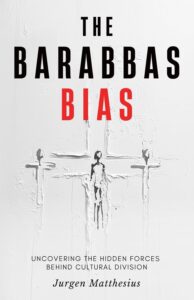
There’s a peculiar phenomenon unfolding in our political landscape—one that transcends mere disagreement and ventures into the territory of reflexive opposition. It’s a pattern where the messenger becomes so reviled that the message itself becomes irrelevant, where outcomes matter less than who achieved them, and where principles bend to accommodate whatever position stands in opposition to a particular figure.
I’ve been observing this dynamic with growing fascination, particularly in the wake of recent geopolitical events. The pattern is striking: when a controversial leader takes action—even action that produces objectively positive results—a segment of their opposition doesn’t simply critique the methods or question the sustainability of the outcome. Instead, they find themselves in the uncomfortable position of defending or downplaying genuinely problematic actors and situations, simply because opposing them would mean agreeing, even tangentially, with someone they’ve committed to opposing at every turn.
[Note: This post contains affiliate links. If you purchase through these links, I may earn a small commission at no additional cost to you.]
The Biblical Parallel
The term “Barabbas Syndrome” draws from one of history’s most consequential examples of this phenomenon. In the Gospel accounts, Pontius Pilate offers the crowd a choice: release Jesus of Nazareth, a teacher accused of blasphemy, or Barabbas, described explicitly as an insurrectionist and, in some accounts, a murderer. The Roman custom allowed for the release of one prisoner during Passover, and Pilate—seeing no legitimate case against Jesus—seemingly expected the crowd to choose the obviously innocent man.
They chose Barabbas.
The historical and theological interpretations of this moment are complex and numerous, but at its core, the story presents us with a stark image: a crowd selecting a known criminal over someone they perceived as a threat to their existing power structures and worldview. Whatever their reasoning—political calculation, religious conviction, crowd manipulation by religious authorities—the outcome was the elevation of demonstrable harm over potential good.
The Modern Manifestation
Fast-forward two millennia, and we see echoes of this dynamic playing out in our hyper-partisan age. The specific policy or action becomes secondary to a more primal calculation: if my political adversary supports it, I must oppose it. If they oppose it, I must support it.
Consider the complexity of international intervention. For decades, thoughtful people across the political spectrum have debated the wisdom, legality, and morality of military action in foreign nations. These debates have involved genuine philosophical differences about sovereignty, humanitarian intervention, unintended consequences, and the limits of American power. Both progressive anti-war activists and conservative non-interventionists have made compelling arguments against military adventurism.
But when political opposition becomes identity rather than principle, something shifts. The question is no longer “Is this intervention justified?” but rather “Who ordered it?” The substance of the action—its goals, its execution, its outcomes—becomes subordinate to the political identity of the actor.
The Venezuela Example
The current situation regarding Venezuela illustrates this perfectly. Here we have a nation that has suffered extraordinarily under authoritarian rule intertwined with narco-trafficking networks. The humanitarian crisis has been documented extensively: millions fleeing the country, widespread hunger, the collapse of basic services, political imprisonment, and the corruption of state institutions by criminal enterprises.
If reports of celebrations in Venezuelan streets are accurate—if people who have lived under this oppression are expressing genuine relief—that would traditionally be considered a relevant data point in evaluating the action taken, regardless of who took it. The question “Are the Venezuelan people better off?” used to be a question that transcended partisan politics.
Yet in the Barabbas Syndrome framework, this becomes complicated. If the intervention was ordered by a figure who generates intense opposition, some critics find themselves in a bind: acknowledging any positive outcome feels like a concession to someone they’ve committed to opposing comprehensively. The path of least cognitive dissonance becomes defending or minimizing the actions of the removed narco-leader, or emphasizing potential negative consequences while downplaying current suffering.
This doesn’t mean the intervention is beyond criticism. Legitimate questions exist: Was it legally authorized? What are the long-term implications for international law? Will it actually improve stability, or create a power vacuum? What precedent does it set? These are the questions that principled opposition should grapple with.
But Barabbas Syndrome skips past these nuanced questions and jumps straight to reflexive opposition, even when that opposition requires awkward intellectual contortions.
The Psychology Behind the Pattern
Why does this happen? Several psychological mechanisms seem to be at play:
Tribal identity over principle: In our polarized environment, political affiliation has become a core identity marker, sometimes superseding religious affiliation, regional identity, or even family bonds. When identity is at stake, consistency with the tribe matters more than consistency with previously held principles.
The enemy of my enemy: There’s an ancient logic that suggests anyone opposed by your enemy must be, at minimum, not as bad as your enemy—or perhaps even good. This logic breaks down when your enemy opposes genuinely harmful actors, but the cognitive shortcut remains seductive.
Motivated reasoning: We’re exceptionally good at finding reasons to support positions we’ve already committed to emotionally. If we need the Venezuelan leader to be less bad than claimed, our minds will find evidence and arguments to support that conclusion, filtering out contradictory information.
Cost of concession: In a zero-sum political environment, any concession feels like defeat. Admitting that a political opponent did something right—or even something with mixed results that include some positives—feels like handing them ammunition. Better to deny any positive outcome than to give an inch.
The Danger of Barabbas Syndrome
The Barabbas Syndrome represents a genuine threat to coherent political discourse and moral reasoning. When we allow our opposition to a person or party to override our assessment of actions and outcomes, we sacrifice our own agency and principles.
If we opposed authoritarian narco-states last year, we should still oppose them this year, regardless of who takes action against them. If we supported humanitarian intervention in one context, we should at least seriously grapple with it in another context, even if the intervening party has changed. If we valued the voices and experiences of oppressed populations previously, we should continue to value them, even when their relief comes from an unexpected source.
The syndrome thinking also creates a kind of moral paralysis. If every action is evaluated solely through the lens of who took it rather than what it accomplished, we lose the ability to build coalitions, find common ground, or even accurately assess reality. We become so invested in opposition that we lose sight of what we’re actually for.
The Solution
Escaping the Barrabas Syndrome requires conscious effort and intellectual humility. It means:
Evaluating actions on their own merits, separate from our feelings about who took them
Maintaining consistent principles even when they lead to uncomfortable agreements with people we generally oppose
Acknowledging complexity: an action can be simultaneously problematic in some ways and beneficial in others
Prioritizing the affected: centering the voices and experiences of those actually impacted by policies, not just using them as props for our domestic political battles
Intellectual honesty: being willing to say “I oppose this person generally, but in this instance, they may have done something right” or vice versa
This doesn’t mean abandoning our values or our broader political opposition. It means refusing to let that opposition rob us of our ability to think clearly and assess reality accurately.
The Path Forward
The Barabbas choice wasn’t really about Barabbas at all—it was about Jesus, about power, about fear of change and disruption to the established order. The criminal was simply the instrument of that choice, the vehicle for expressing opposition to something else.
Similarly, when we find ourselves defending the indefensible or opposing the beneficial purely based on political identity, we’re making a Barabbas choice. We’re allowing our opposition to one thing to drive us into the arms of something potentially worse.
The antidote is to hold fast to principles rather than personalities, to evaluate outcomes alongside intentions, and to remember that politics is meant to serve human flourishing—not the other way around. When we find ourselves contorting our values to maintain political consistency, it’s worth asking whether we’ve fallen into syndrome thinking, whether we’ve let our opposition to one person or party make a Barabbas of us all.
The crowd in Jerusalem made their choice. We don’t have to keep making the same one.
Hey there! We hope you love our fitness programs and the products we recommend. Just so you know, Symku Blog is reader-supported. When you buy through links on our site, we may earn an affiliate commission at no extra cost to you. It helps us keep the lights on. Thanks.
Disclaimer: The information provided in this discussion is for general informational and educational purposes only. It is not intended as medical or professional advice. Only a qualified health professional can determine what practices are suitable for your individual needs and abilities.